A room drawn from end to end
Walls, floor, ceiling: nothing escapes the line. You do not stand in front of the work, you walk into it — and the garden light, crossing through, redraws the drawing every hour.

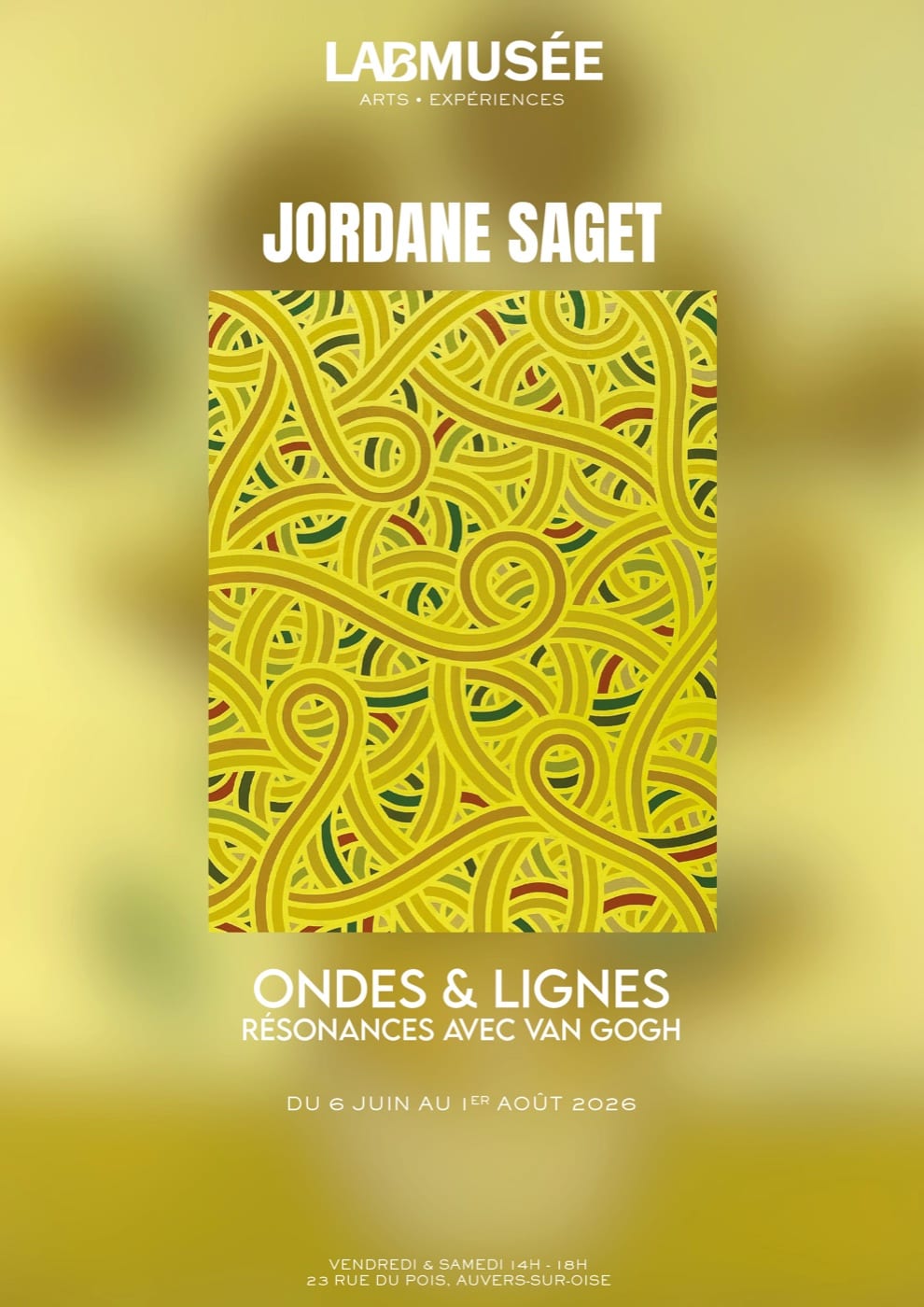
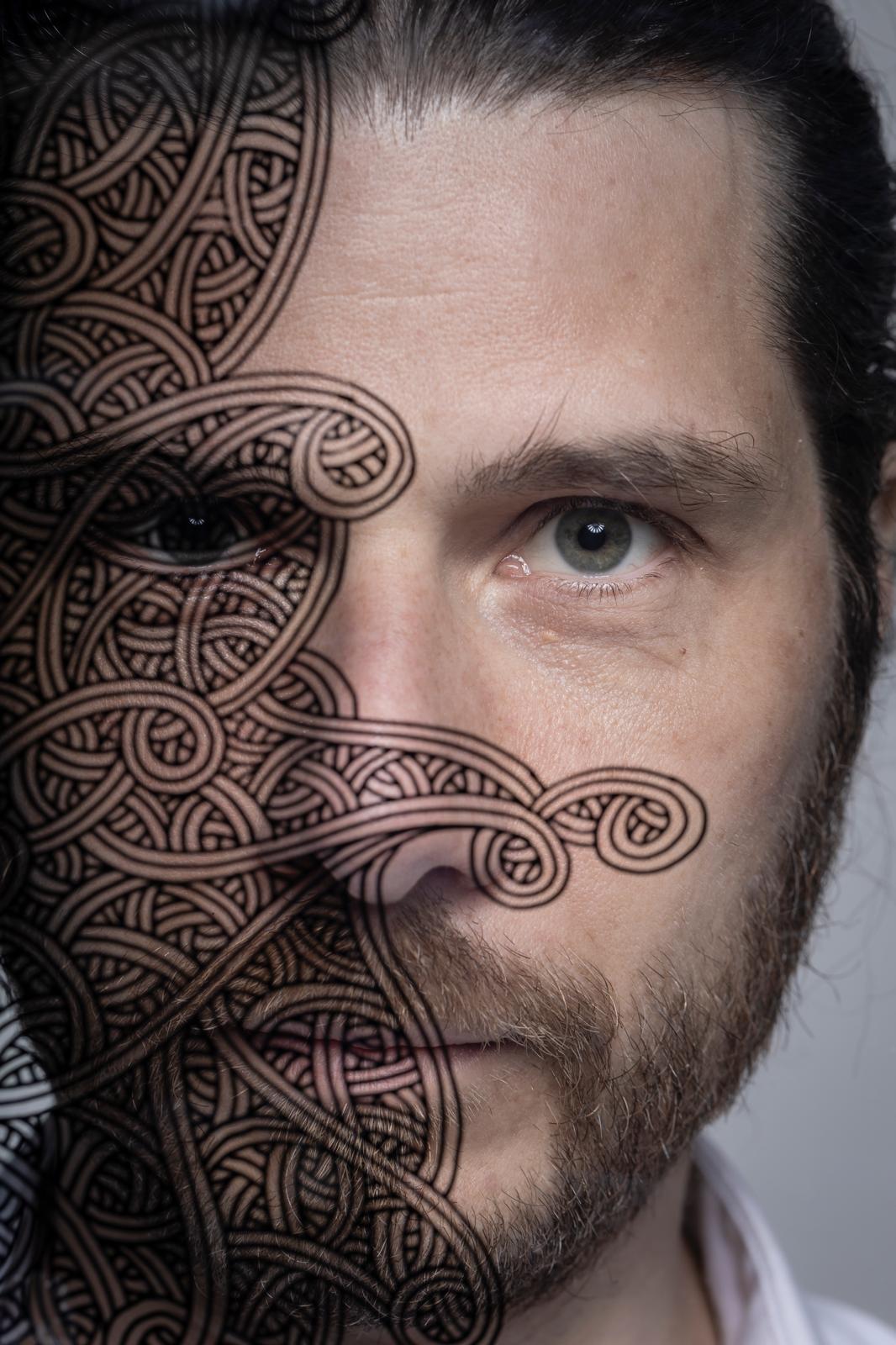
He draws in chalk, in a single continuous gesture, lines that undulate and answer one another. At LabMusée, that line left the pavement to take over the rooms, the garden, the village of Auvers — and even the plate.

His gesture is known first from the pavements of Paris: three parallel chalk lines, laid down at night, erased by rain or by footsteps. Nothing is made to last. That is exactly what makes the work so hard to exhibit — and so interesting to invite in.
LabMusée handed him the entire building. The line climbed the walls, covered the floors, crossed the windows, then overflowed the museum to settle in the village. It stopped where Van Gogh had stopped: in front of the Auvers church, and inside the Auberge Ravoux dining room.
One thing survived that season when everything else had been erased: the LabCafé's signature pastry, in which chef Jérémy Tuaz reprised the artist's stroke in white chocolate. It is the only Jordane Saget line you are allowed to eat.

Walls, floor, ceiling: nothing escapes the line. You do not stand in front of the work, you walk into it — and the garden light, crossing through, redraws the drawing every hour.

Nine discs hung on the white wall, each folding the same continuous stroke back on itself. The form is that of a church rose window — no accident in a village whose own was painted by Van Gogh.

The church Van Gogh painted in June 1890 is seen from a cobbled forecourt. Jordane Saget covered it in chalk, straight onto the stones, fixing nothing: a few rains were enough to take it all back. The village had its ephemeral painting, for exactly one summer.

The Auberge Ravoux is the house where Van Gogh spent his last days. Nothing is hung on its walls. So Jordane Saget worked on what is not a wall: the dining room's great mirror, drawn by hand, one evening, in a single sitting.

The drawing does not cover the mirror: it frames it from within. What you see at the centre is still the room, its tables, its diners — the work is the window, not the picture.

Chef Jérémy Tuaz translated the stroke into white chocolate. The exhibition has been taken down, the chalk on the forecourt is gone — the pastry, meanwhile, has never left the menu.